Understanding Arrow Spine: A Complete Guide
What is Arrow Spine?
Arrow spine is a measurement of an arrow shaft's stiffness — how much it flexes when a force is applied. When an arrow is released from a bow, it doesn't fly perfectly straight. It actually flexes (oscillates) around the bow's riser in a phenomenon called "archer's paradox." The amount of flex is determined by the spine.
Static vs. Dynamic Spine
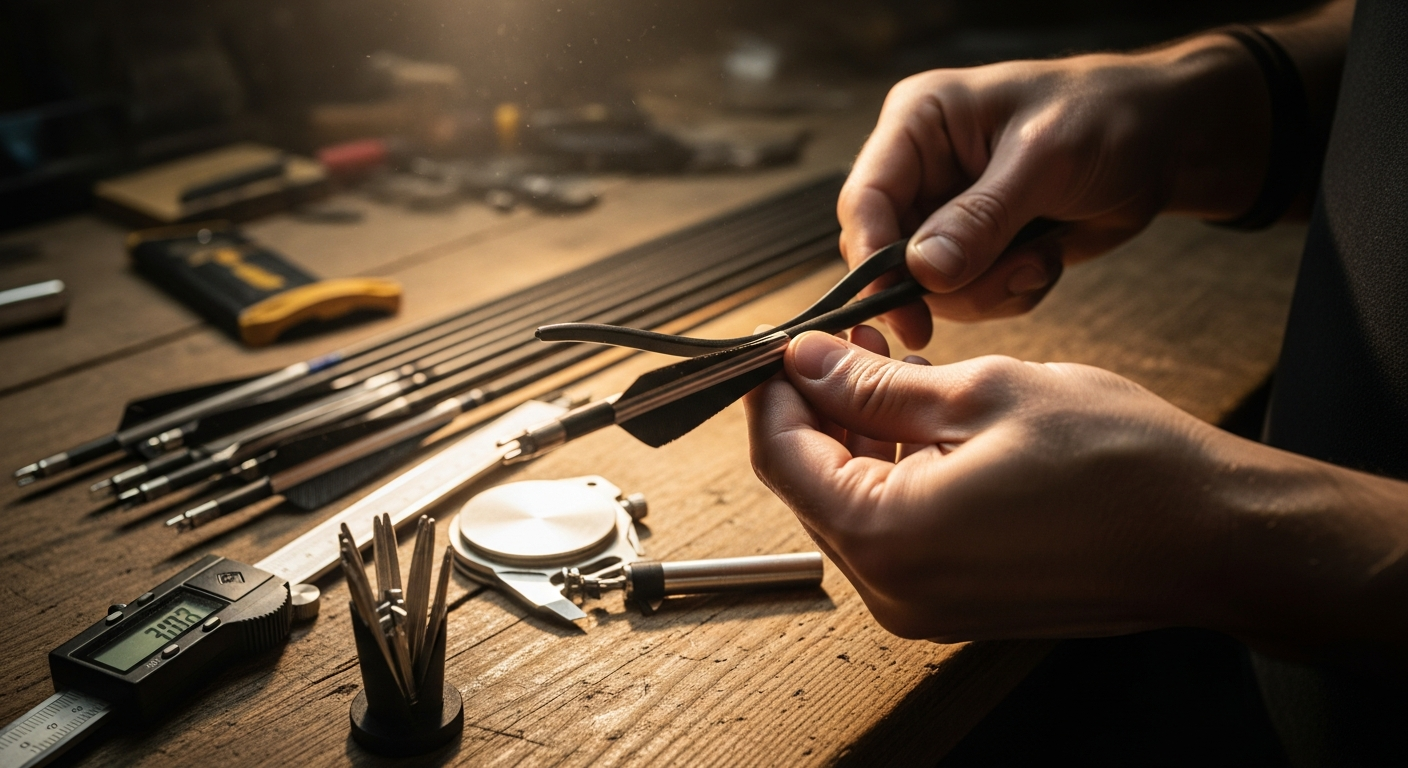
Static spine is measured by hanging a 1.94 lb weight from the center of a 29-inch shaft and measuring deflection in inches. A shaft that deflects 0.300 inches has a spine of 300. Lower numbers = stiffer arrows.
Dynamic spine is how the arrow actually behaves when shot from YOUR bow. It's affected by point weight, arrow length, bow draw weight, cam aggressiveness, and even string material.
Choosing the Right Spine
As a general starting point for compound bows:
- 70 lb draw, 28" arrows: 300 spine
- 60 lb draw, 28" arrows: 340-350 spine
- 50 lb draw, 28" arrows: 400 spine
- 40 lb draw, 28" arrows: 500 spine
These are starting points — always use the manufacturer's spine chart for exact recommendations based on your specific setup.
What Happens with Wrong Spine?
Too stiff (underspined number, like 250 when you need 350): Arrows will fly with the nock end left of center (for right-handed shooters), inconsistent groups, and poor broadhead flight.
Too weak (overspined number, like 500 when you need 350): Arrows will fly with the nock end right of center, erratic flight, and can be dangerous as the arrow may contact the riser.